
Luke 22:35-38 (ESV) 35 And he said to them, “When I sent you out with no moneybag or knapsack or sandals, did you lack anything?” They said, “Nothing.” 36 He said to them, “But now let the one who has a moneybag take it, and likewise a knapsack. And let the one who has no sword sell his cloak and buy one. 37 For I tell you that this Scripture must be fulfilled in me: ‘And he was numbered with the transgressors.’ For what is written about me has its fulfillment.” 38 And they said, “Look, Lord, here are two swords.” And he said to them, “It is enough.”
Exodus 22:2 (ESV) 2 If a thief is found breaking in and is struck so that he dies, there shall be no bloodguilt for him,
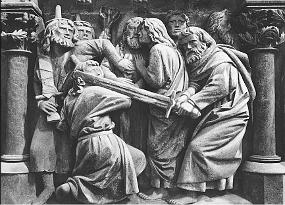 For the Bible-believing Christian, the question of self-defense, as previously defined, must be understood as to whether it is prohibited (pacifism), or permitted under certain Biblical guidelines or principles. Certain principles regarding the sanctity of life have been explored and the relevant passages not only demonstrate that human life is sacred, but it is also legitimate to protect and defend it. But the question then is; exactly how do we protect and defend life in a self-defense scenario? Can we find passages in the Scriptures that will speak authoritatively on this subject and/or provide clear guiding principles for us to follow? What we want to establish… Is there a clear synthesis or coherent Christian view on the subject? Continue reading
 Charles Spurgeon writing on Penal Substitution
 It is always a nightmare to hear of another school mass murder. Even though they may be infrequent, you cannot help but feel there are just too many. It sickens the heart. You realize you cannot know or understand the pain that has been inflicted upon the families of the victims that have perished or were injured. All kind of questions surface from your heart as you try to wrap your mind around what type of person could do this? Were did such evil come from? How do we stop this insanity?
 Now we come to the heart of the matter. It’s about splinters verses logs. Both are metaphors used by Christ to point out that both parties had sin in their lives. The one with the splinter in his or her eye is clearly being affected by sin. And it is no small matter, even though it’s a splinter. It hurts. It affects vision. You can’t walk around with a splinter in your eye and not be noticed! You’re likely to fall on your face. The other person, in this case, the Scribes and Pharisees are afflicted with a log in their eye. They are completely debilitated and yet they see it their duty to remove the splinter from another all the while there is a log in their eye.
 The Pharisees had a high view of themselves. They were self-righteous in the extreme. As a result, everyone was judged as beneath them. They had in essence, set themselves up as God. They thought themselves to be exempt from judgment because they thought they measured up to the preconceived notions of God’s standards. But they only measured up to a set of human standards that they had established. They certainly didn’t measure up to God’s perfect standards.
  You cannot walk with the Lord for very long and not be confronted with the accusation of judgmental-ism. Even within the church, this seems to be the case as there is an ever-present movement within, that wants to reject doctrine as unnecessary and judgmental. So, that would mean we are not to criticize or judge anyone for anything. We live in a world that hates theological and moral absolutes. So, we tend to resort to simplistic interpretations of this passage to justify that position of judgmental-ism. The last thing we want to become is a “judgmental Pharisee.”
 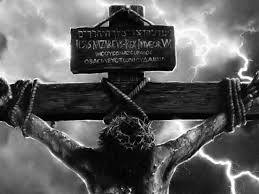 Titus 3:4-5 (ESV) 4 But when the goodness and loving kindness of God our Savior appeared, 5 he saved us, not because of works done by us in righteousness, but according to his own mercy, by the washing of regeneration and renewal of the Holy Spirit,
 Ecclesiastes 3:1 (ESV) 1 For everything there is a season, and a time for every matter under heaven: